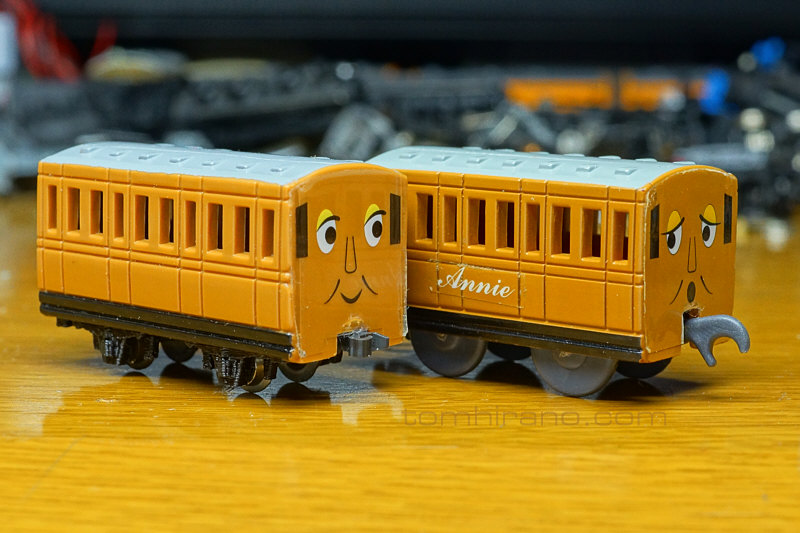
It was early last month (lol), but a stereolithography 3D printerAnycubicI tried introducing Photon. The reading is any cubic photon. This method involves applying a thin layer of liquid that hardens with light, exposing it to ultraviolet light in the desired shape, and stacking the thin, hardened materials. Commercial use uses lasers, but this model uses ultraviolet LEDs for curing, so it is small enough for individuals to own. On the other hand, the output time will be longer.
The shape of the main body looks like this.
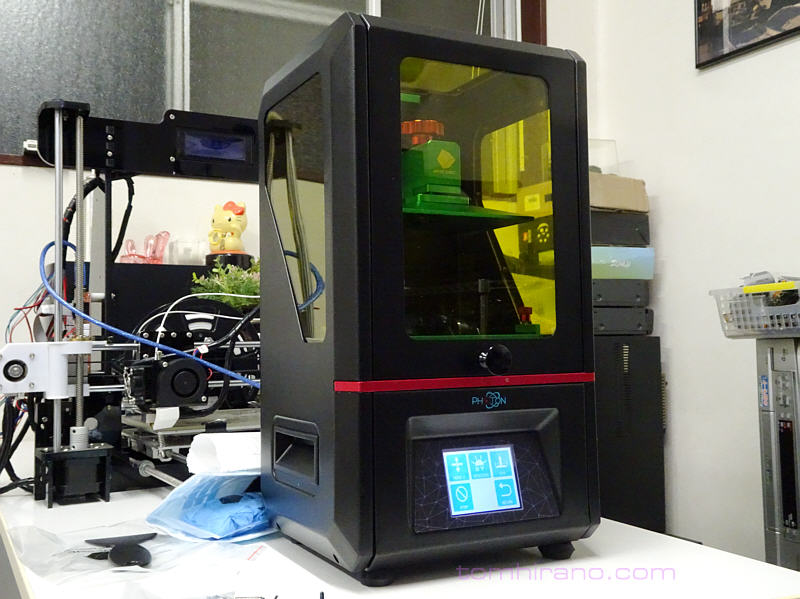
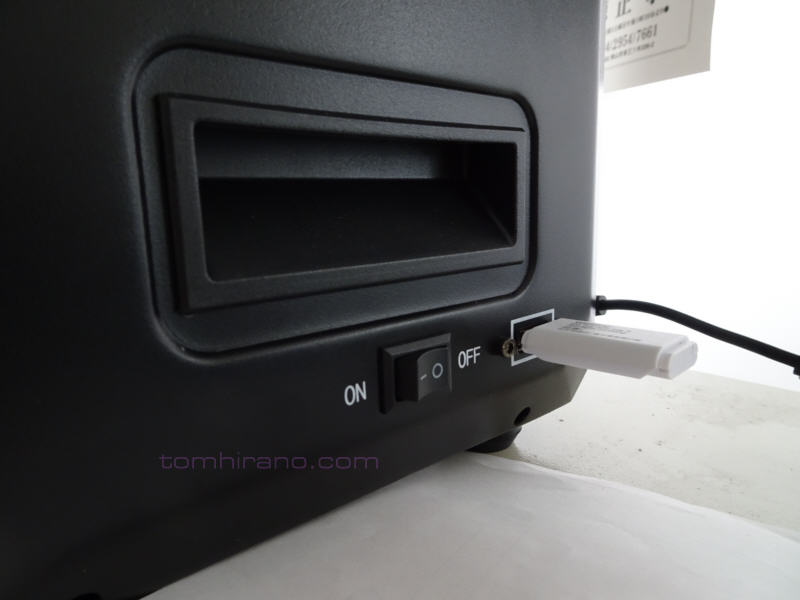
The size of the Photon body is approximately 23cm x 23cm x height 40cm. There is a power switch and a USB terminal on the right side when facing the front, and insert the USB memory containing data here.
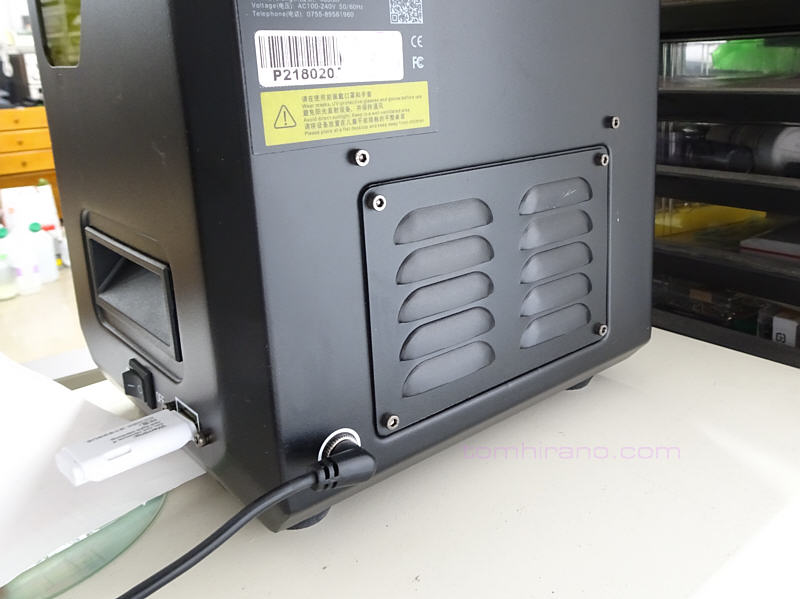
Behind is the power terminal and exhaust section.
When the 3D printer arrives, the first thing I do is set up the Z axis (vertical direction).
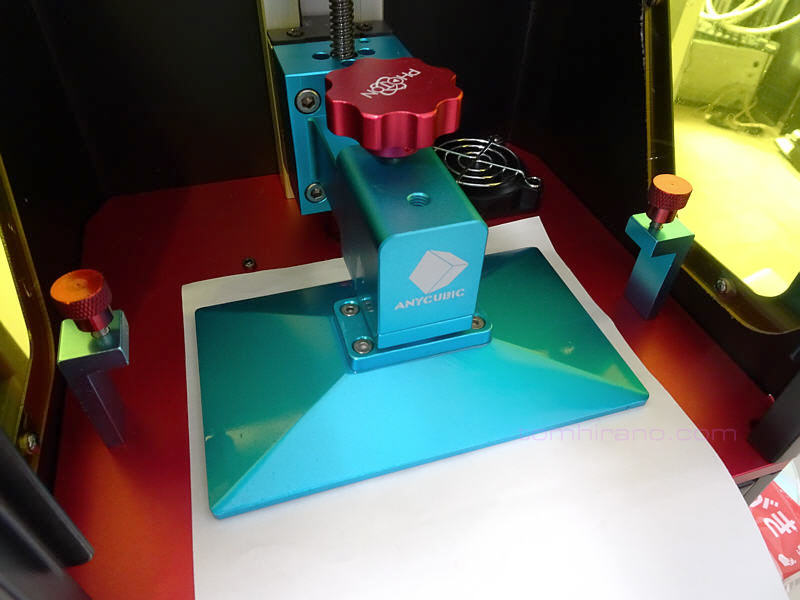
While looking at the included instructions, align the base and LCD parallelly, and set the gap to the thickness of the paper. A tool to fix the base is included.
Next, install the software to create data. The included USB memory contains software that converts 3D data such as STL to data for this unit (photon format). With this software, you can output your 3D data as a dedicated file. Put the output file into a USB memory and connect it to the machine.
Pour the photocuring resin liquid into the vat.
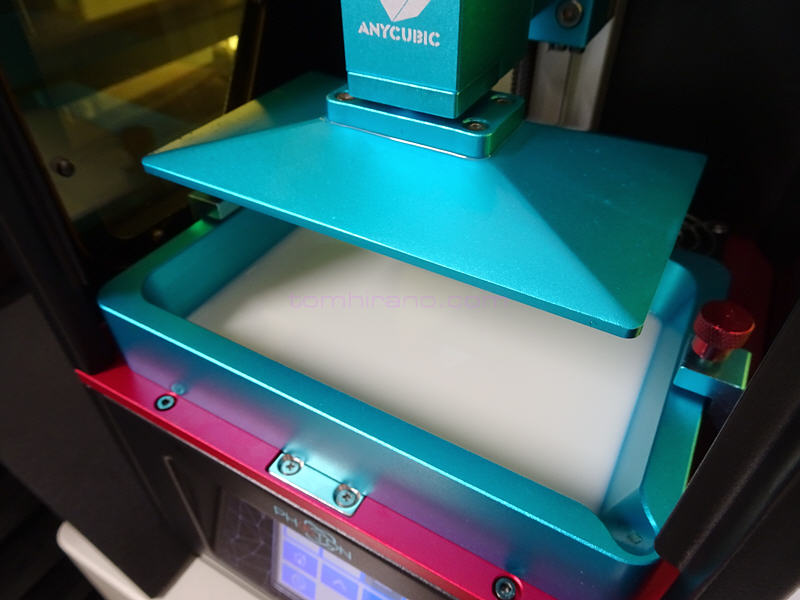
Operate the touch panel to select the desired data > print.
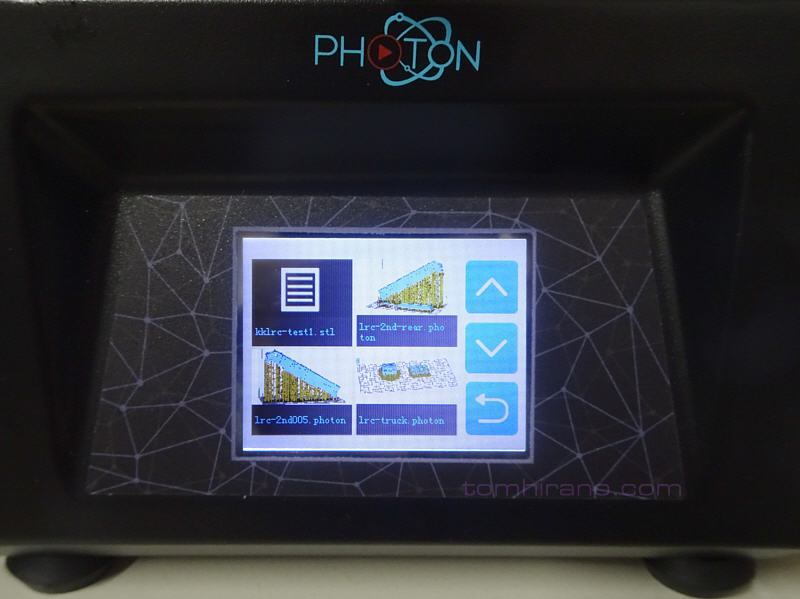
Depending on the settings and size, it takes 1 to 15 hours to output.
When you receive a signal that the output is complete, use a spatula or similar tool to remove the output product from the base.
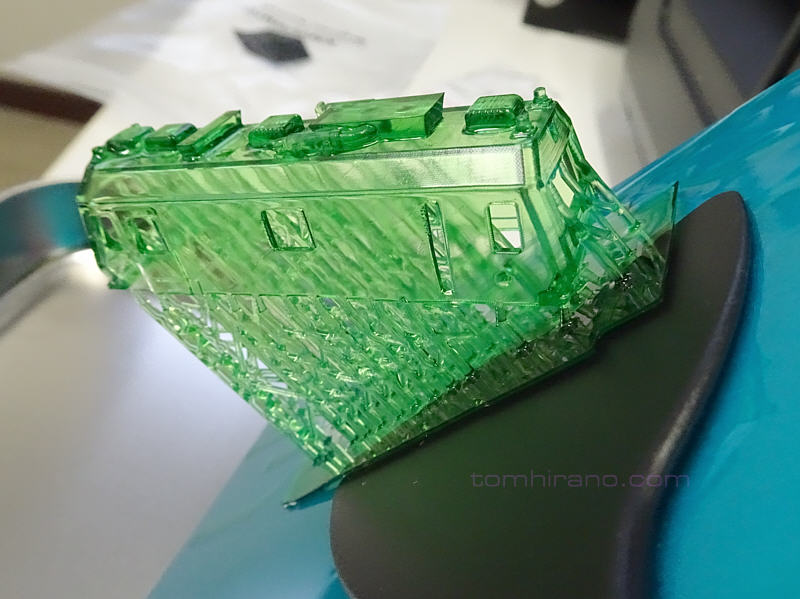
Remove excess liquid with isopropyl alcohol. After cleaning, apply ultraviolet light again to harden completely.
Although the finished product is beautiful, there are many drawbacks, such as the liquid being muddy, staining the surrounding area, and having a strong odor. To be honest, I think it would be difficult to do this in a room or bedroom with roommates. Also, the liquid is toxic, so extreme care must be taken when using it in environments with pets or small children. People with chemical allergies should also be careful. Even if it gets too much sunlight, it will suddenly harden, so I think you need a room that doesn't get sunlight but has good ventilation, or a large space where you don't have to worry about smells (lol)
Since Photon is an overseas product, support such as troubleshooting, maintenance, and parts ordering will be conducted in English. Although it has many drawbacks, such as the smell, it reproduces details that are incomparable to the FDM lamination method that uses filaments. Recommended for making precision items.
You too ^^